Why start at 7?
Money habits start early. In 2013, the University of Cambridge wrote a report on this for the UK's Money Advice Service. It found that many money habits begin to form by about age 7.
At this age, children can count, add and wait a little. They also copy what they see. So it's a good time to start.
You don't need to be a money expert. You need small moments, again and again.
Six ideas, in a good order
Teach these one at a time. Each one builds on the one before.
- Money is swapped for things. Coins and notes are not the thing itself. We swap money for what we need and want.
- Money is earned. Someone works to get it. Tell your child, in simple words, where your money comes from.
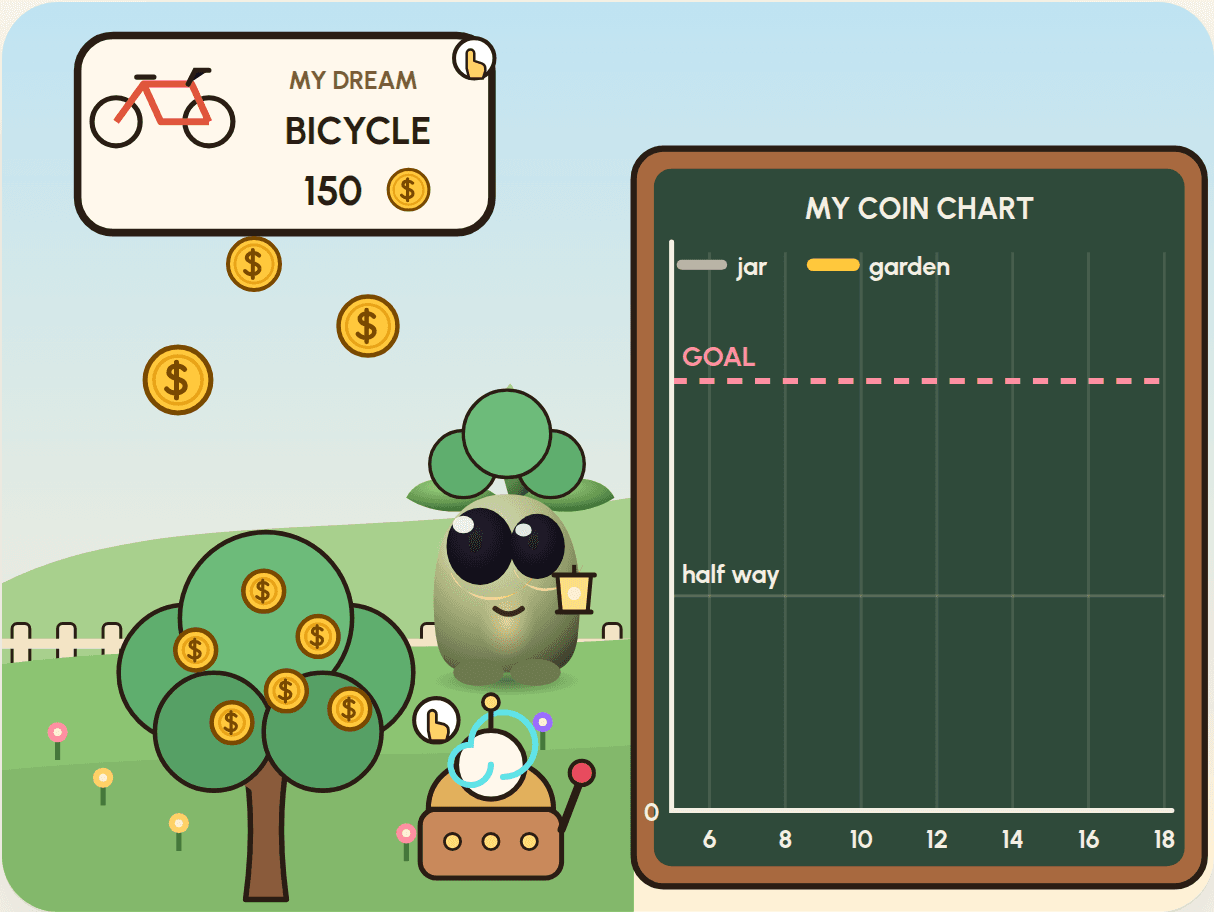
- Saving means waiting. Not buying now can mean something better later.
- Spending means choosing. If you buy this, you can't buy that. Every price is a choice.
- Giving is a choice too. Money can help people, animals or places we care about.
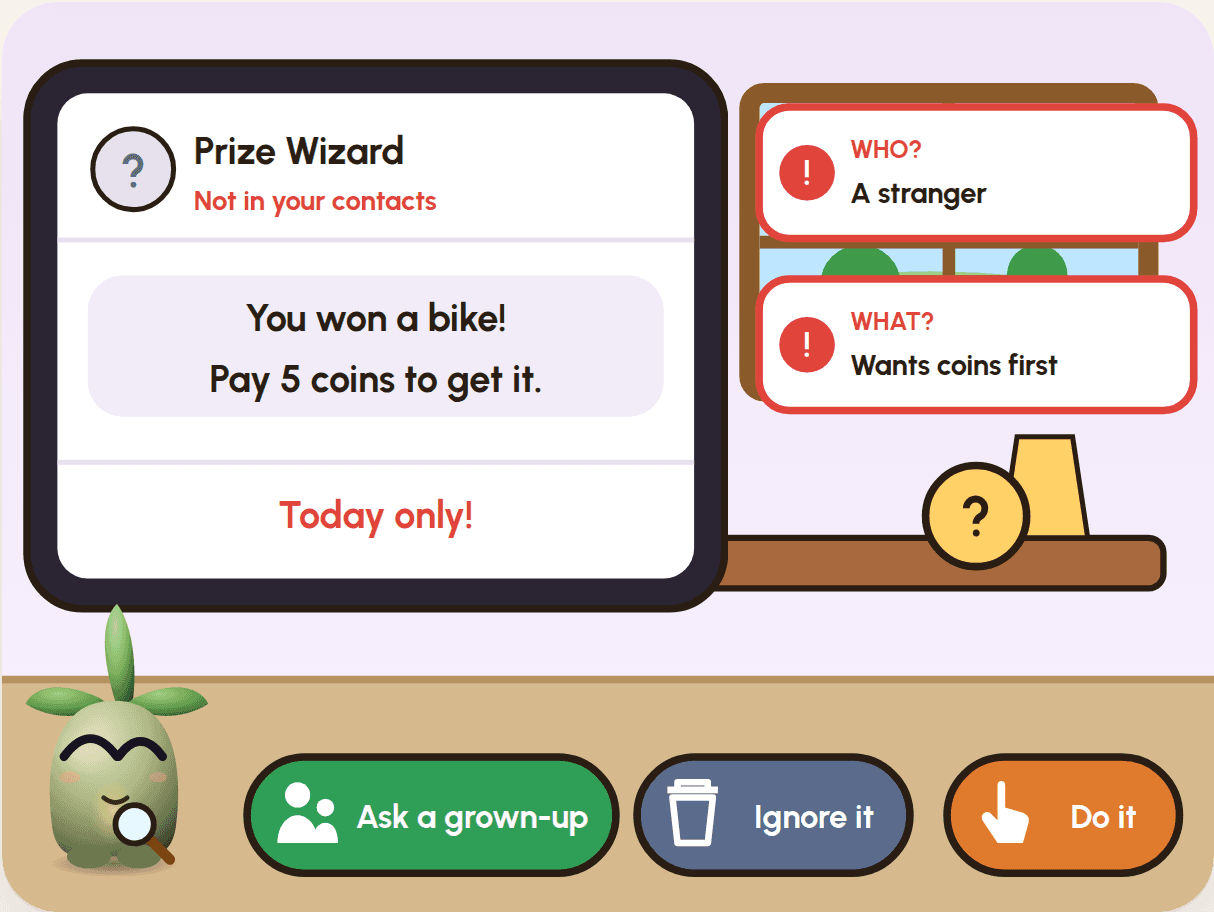
- Some offers are tricks. A message that says you've won can be a scam. A grown-up can always help check.
When your child is ready, add three more. How to compare prices. How card money works. And how saved money can grow over time.
Talk out loud
Children can't see most money today. Cards tap. Phones scan. Money moves on a screen.
So say what you're doing, in short sentences, while you do it.
You could say“This costs 12. We have 20. So we'll have 8 left.”
“I'm choosing the smaller bag. We only need six apples.”
“I'm not buying that today. I'm saving for our trip.”
Give them some money to manage
Children learn best with real choices. Pocket money gives them that. Our pocket money guide shows how to start.
The amount matters less than the routine. Pay the same amount, on the same day.
Then let them choose. If they spend it all on the first day, don't top it up. Running out early is a small, safe lesson.
Let small mistakes happen
Say your child spends everything on a toy that breaks. That hurts a little. But it costs far less now than the same mistake at 25.
Try not to say "I told you so". Ask a question instead.
You could say“Was it worth it? What would you do next time?”
Use games
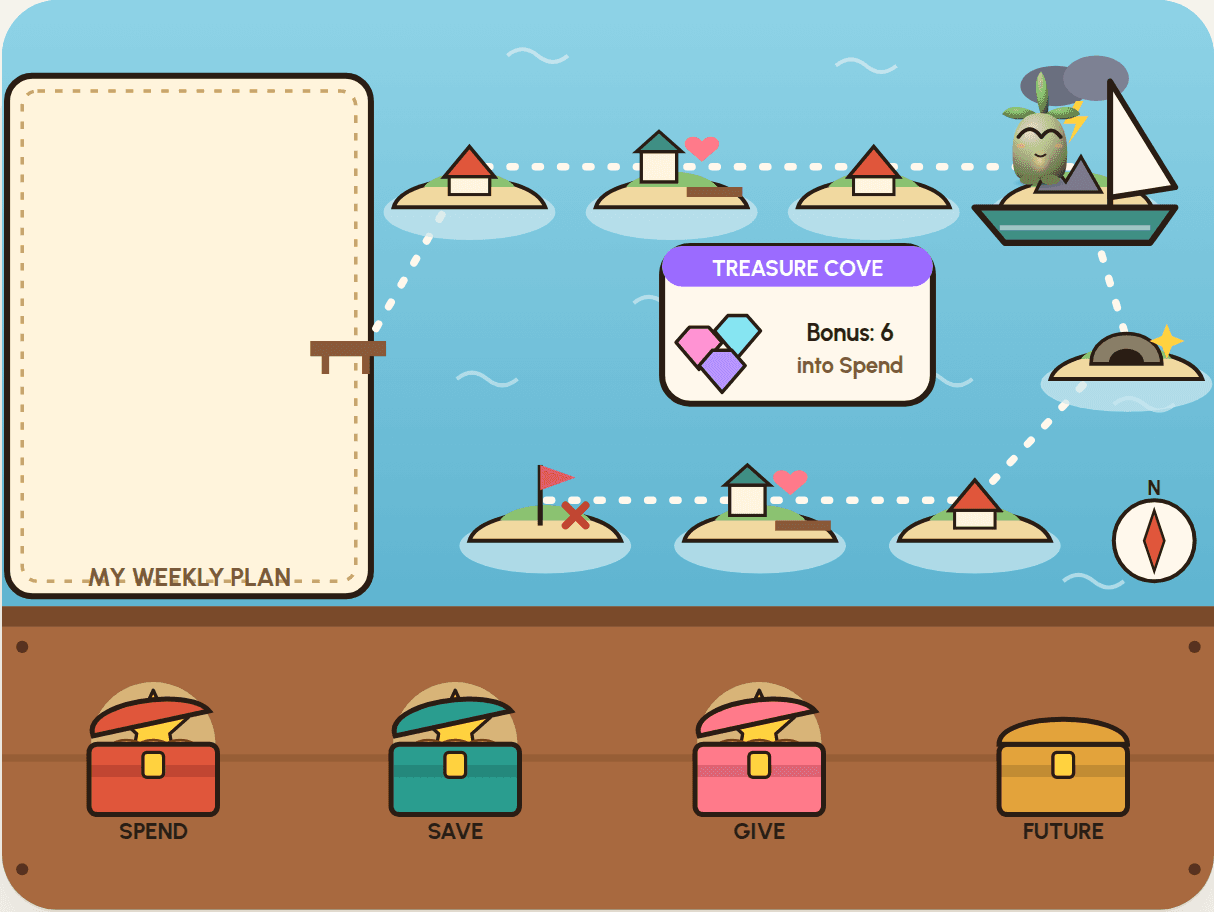
Games let children try big ideas safely. They can save, spend, run a stall or spot a scam, all with pretend coins.
In a Tinker Penny pack, your child builds a money game in Scratch, then plays it. Building it shows them how the money rules work, from the inside.
A rough guide by age
Every child is different, so go at your child's pace. This is only a guide.
- 7 to 8: counting coins, needs and wants, and saving for one small goal.
- 9 to 10: pocket money with a simple plan (spend, save, give), and comparing prices.
- 11 to 12: bigger goals, card money, and how saving can grow over time.
- From their first tablet: what a scam looks like, and asking before they click.